
Emergency air quality conditions were declared Friday across parts of eastern California as pollution reached hazardous levels, prompting officials to warn residents against all outdoor activity.
Hazardous air pollution represents the most severe category on the federal Air Quality Index (AQI) and signals immediate health risks for everyone.
Communities across Owens Valley and surrounding desert regions are being urged to remain indoors and limit physical exertion until conditions improve.
Why It Matters
Air quality levels this extreme are uncommon and indicate that outdoor air is unsafe even for healthy adults.
When conditions reach this threshold, public health guidance shifts from caution to emergency response.
What To Know
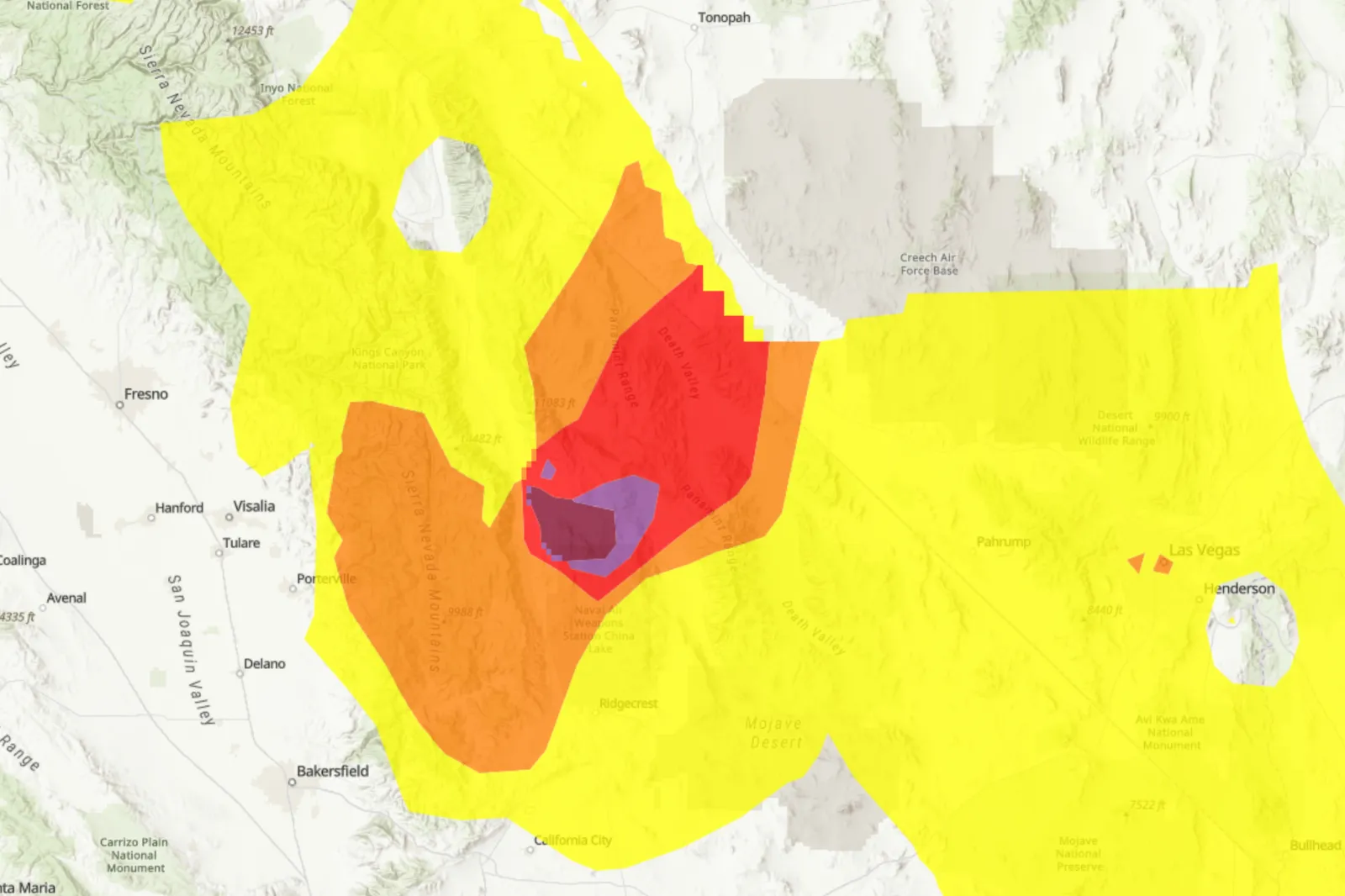
New maps published by the Environmental Protection Agency’s (EPA) AirNow show parts of eastern California experiencing some of the worst air pollution in the country on Friday, with isolated areas reaching the agency’s highest “maroon” or hazardous category.
The most severe conditions appear concentrated across parts of Owens Valley, including communities near Keeler, stretching toward the Talc City Hills and Argus Mountains, where the AQI indicates hazardous air pollution and “emergency conditions.”
In these areas, health officials advise everyone to avoid all physical activity outdoors.
Surrounding regions are shown in purple, representing “very unhealthy” air quality, stretching toward areas including the Panamint Springs, Darwin, and parts of the Coso Range.
Farther out, red and orange zones indicate unhealthy and sensitive‑group warnings extending toward the Death Valley region, the Grapevine Mountains, and neighboring desert communities.
While not all areas are under hazardous alerts, the maps show a wide swath of elevated pollution, meaning air quality may pose risks well beyond the core warning zone.
Officials caution that conditions can change rapidly depending on wind and weather patterns.
What The AQI Colors Mean
The EPA’s Air Quality Index (AQI) uses six color‑coded categories to describe health risks:
- Green (0–50, Good): Air quality is satisfactory, with little or no health risk.
- Yellow (51–100, Moderate): Air quality is acceptable, though unusually sensitive individuals may experience symptoms.
- Orange (101–150, Unhealthy for Sensitive Groups): People with heart or lung disease, older adults, children, pregnant women, and outdoor workers may be affected.
- Red (151–200, Unhealthy): Some members of the general public may experience health effects, with sensitive groups more seriously impacted.
- Purple (201–300, Very Unhealthy): A health alert is in effect, and outdoor activity should be limited or avoided.
- Maroon (301 and higher, Hazardous): Emergency conditions are declared, with serious health risks for the entire population.
When AQI values surpass 300, officials urge everyone to remain indoors and keep activity levels low.
Why Particle Pollution Is Dangerous
Particle pollution consists of microscopic particles that can be inhaled deep into the lungs.
These particles often come from sources such as vehicle emissions, industrial activity, dust, and wildfires.
Exposure has been linked to asthma attacks, reduced lung function, heart attacks, strokes, and an increased risk of early death, particularly for people with pre‑existing heart or lung disease.
How To Protect Yourself
Health officials recommend checking AirNow.gov for real‑time air quality data and adjusting daily activities accordingly.
When pollution levels are high, residents are advised to reschedule outdoor plans, reduce exertion, and stay indoors when possible.
Because outdoor pollution can seep inside, steps such as using HEPA air filters and avoiding indoor smoke sources may help reduce exposure during prolonged air quality events.